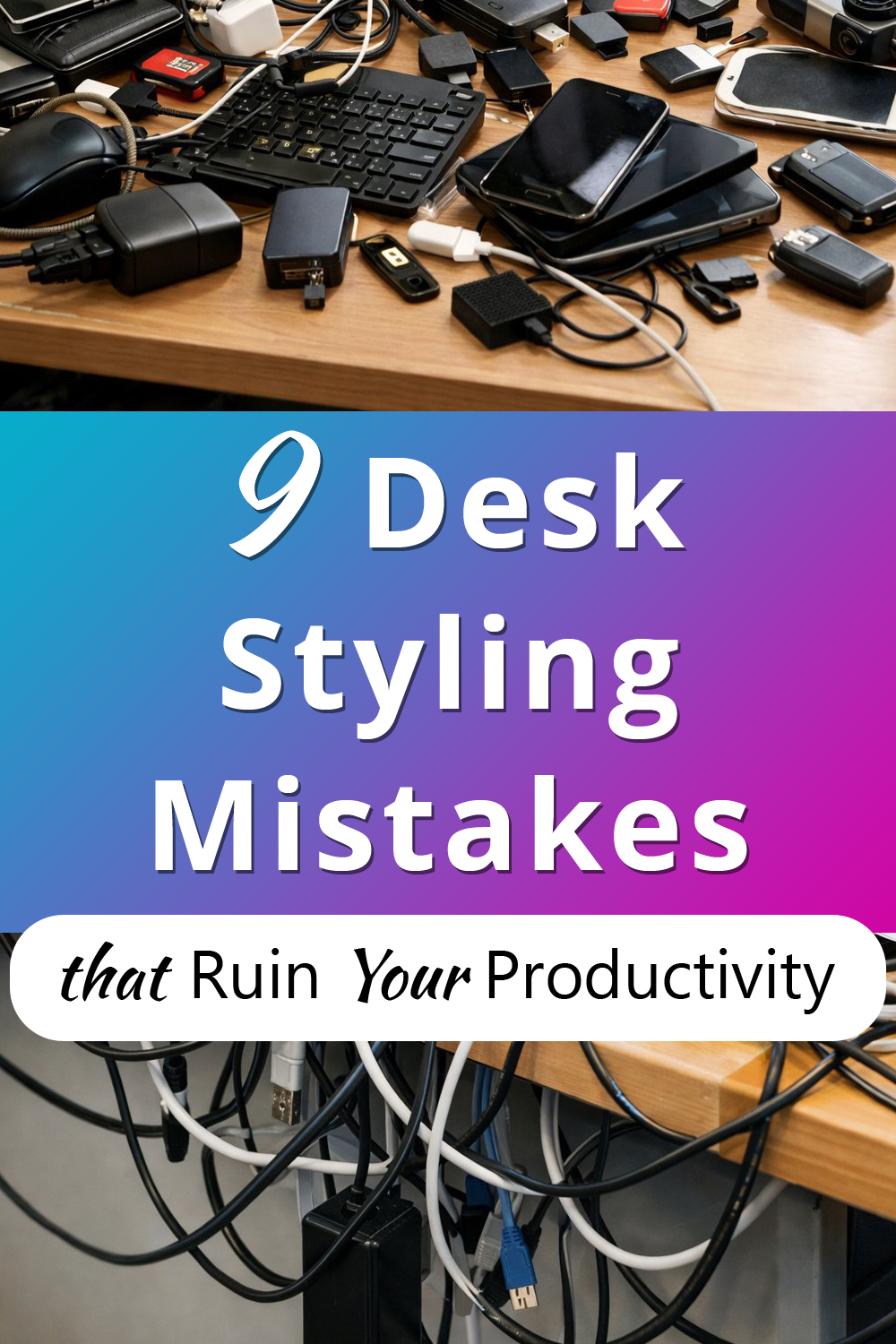
Your desk setup does more than just shape how your workspace looks. The way you arrange stuff on your desk can really affect your focus and productivity!
Even small styling choices at your desk can quietly drain your energy. It’s easy to overlook how messy cables, bad lighting, or a pile of decorations can make it tougher to concentrate.
Let’s look at some common desk styling problems that might be affecting your work. Issues with gadgets, clutter, and comfort could be slowing you down more than you think.
Let’s get started!
Want to Save this Article?
You’ll also love: 10 Easy Desk Decluttering Ideas for a Calm and Productive Workspace
To create most of these inspiring designs and make them as specific as possible, I use the latest AI design software.
1. Cluttering Your Desk with Unnecessary Gadgets
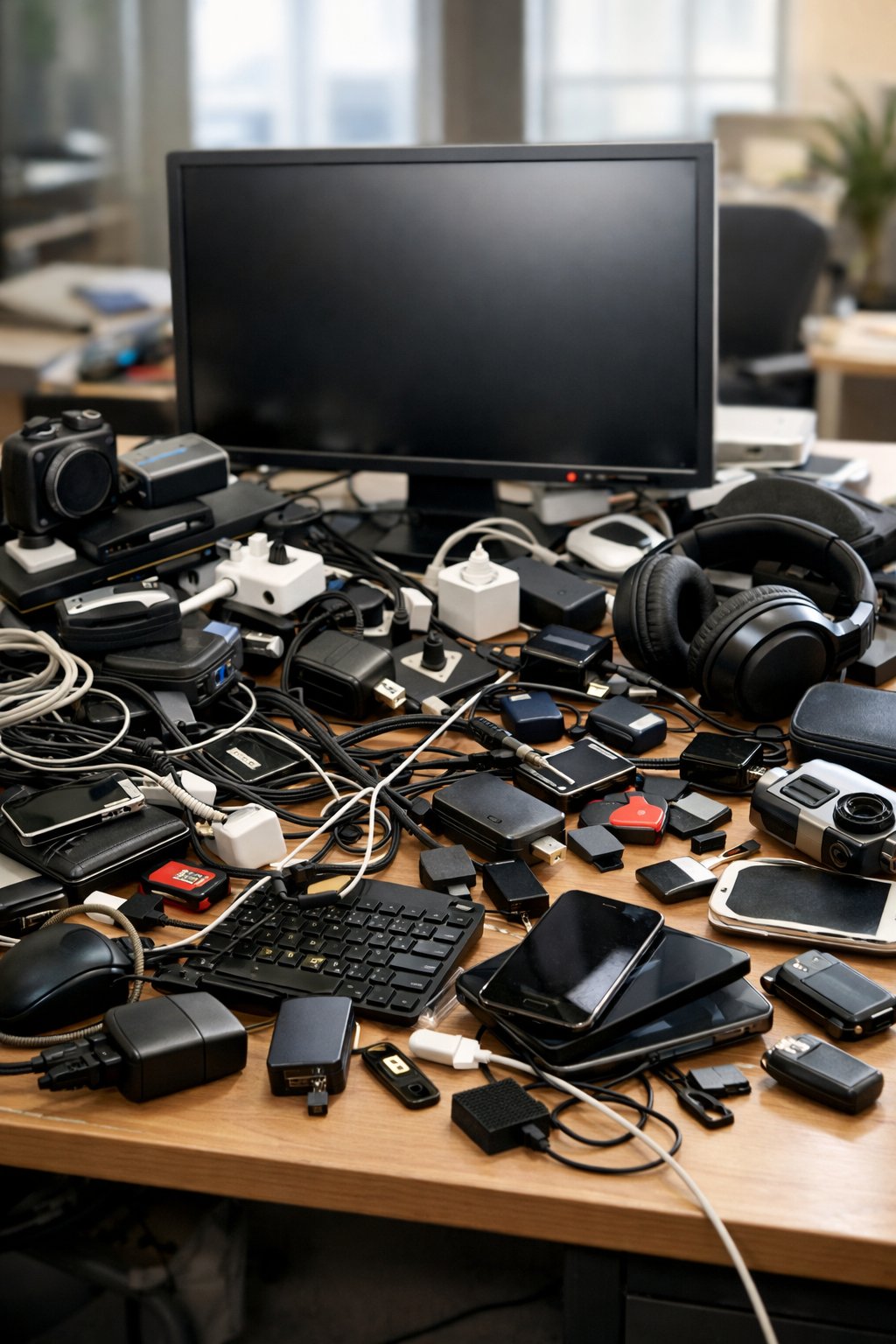
You might think that an extra USB hub, a fancy pen holder, and a desktop vacuum make you more efficient. But they actually do the opposite.
Every item on your desk takes up mental space. Your brain has to process each object, even if you’re not actively using it. This creates visual noise that drains your focus.
Gadgets also take up physical room. When you need space to spread out papers or work on a project, you’ll waste time moving things around.
Keep only what you use daily. Your computer, phone, and maybe a notepad are usually enough. Store everything else in a drawer or cabinet.
A clear desk helps your mind stay clear too. You’ll find it easier to concentrate when you’re not surrounded by distractions.
Read also: 15 Smart Home Office Organizing Hacks that Actually Work
2. Ignoring Proper Cable Management
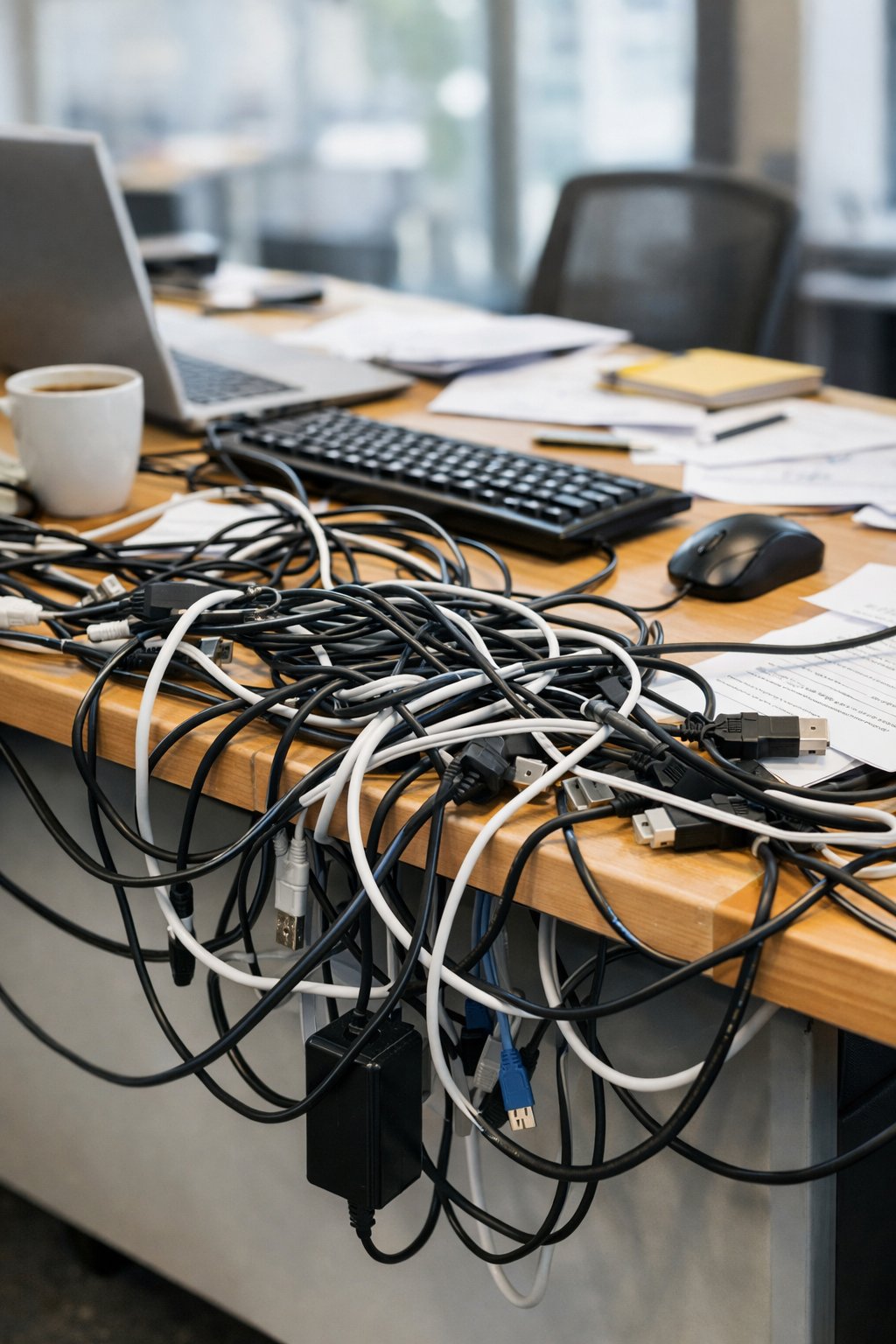
Tangled cables scattered across your desk create more problems than you might think. When cords are messy, you waste time searching for the right charger or untangling knots just to plug something in.
Those dangling wires also collect dust and make cleaning your workspace harder. You end up avoiding tidying up because dealing with the cable mess feels like too much work.
Poor cable management affects your focus too. Visual clutter from twisted cords signals chaos to your brain, making it tougher to concentrate on tasks. Your eyes keep catching on the mess instead of staying on your work.
Simple fixes like cable clips, velcro ties, or a cable box can keep things organized. Spending five minutes setting up a basic system saves you frustration every single day.
3. Overusing Bright or Distracting Desk Accessories
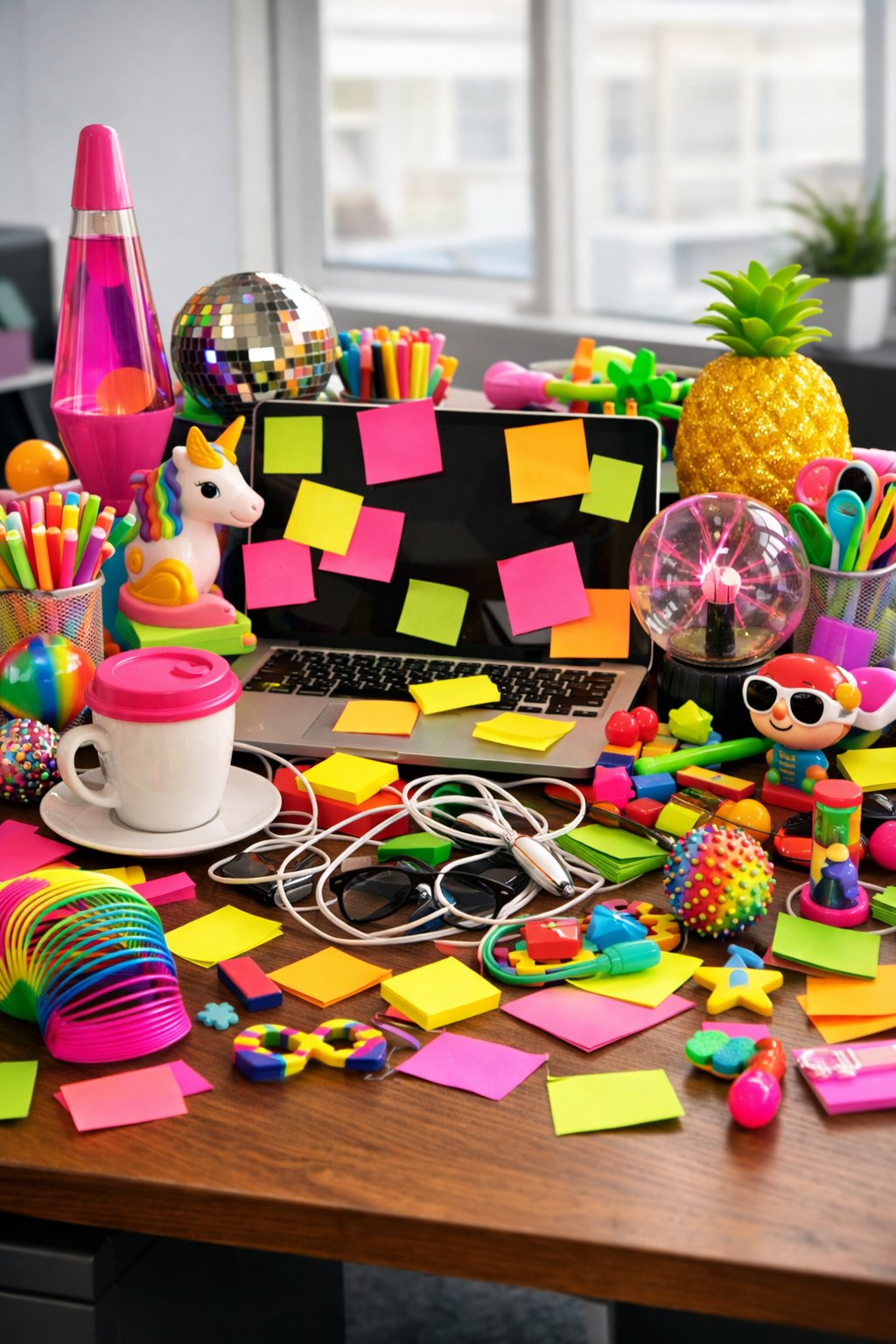
Bright colors and fun decorations might seem like a good way to make your desk more enjoyable. But too many of them can actually work against you.
Your brain has to process everything in your field of vision. When you have neon sticky notes, bold patterned organizers, and flashy trinkets everywhere, your mind keeps getting pulled away from your work.
You don’t need to have a boring desk. Just choose one or two accent pieces in colors that make you happy without demanding constant attention.
Neutral tones with small pops of color work best. This helps your eyes rest on your screen or papers instead of wandering around your workspace.
4. Placing Your Monitor at the Wrong Height

Your monitor’s position affects more than you might think. When it’s too low, you end up looking down all day. This strains your neck and upper back.
When your screen sits too high, you tilt your head backward. This creates tension in different areas but causes just as much discomfort.
The right height means your eyes naturally land on the top third of your screen. You shouldn’t need to move your neck up or down to see your work clearly.
Poor monitor placement makes you tired faster. Your body fights against an awkward position for hours. This leaves you with less energy to focus on actual work.
Take two minutes to adjust your screen today. Your neck will thank you by the end of the week.
5. Having Poor Lighting
Bad lighting at your desk makes your eyes work harder than they should. When you’re squinting at your screen or straining to read documents, you’re setting yourself up for headaches and fatigue.
Dim lighting forces your eyes to constantly adjust. This leads to tired eyes by mid-afternoon. You might not notice it right away, but eye strain builds up throughout the day.
Harsh overhead lights or glare on your screen create the opposite problem. Your eyes still struggle to focus properly.
The fix is simple. Add a desk lamp that gives you enough light without being too bright. Position your screen to avoid glare from windows or ceiling lights. Your eyes will feel less tired, and you’ll get more done.
6. Uncomfortable or Unsupportive Chairs
Your chair affects how you work more than you might think. When you sit in an uncomfortable chair for hours, your body starts to hurt. Your back aches, your neck gets stiff, and you can’t focus on your tasks.
A bad chair makes you fidget and shift around constantly. You waste time trying to find a comfortable position instead of getting work done.
Your chair should support your lower back and let your feet rest flat on the floor. The seat height matters too. If it’s too high or low, you’ll strain your legs and back.
You don’t need an expensive office chair to be productive. Just make sure yours has basic support and feels comfortable for long periods.
7. Keeping Piles of Unorganized Papers
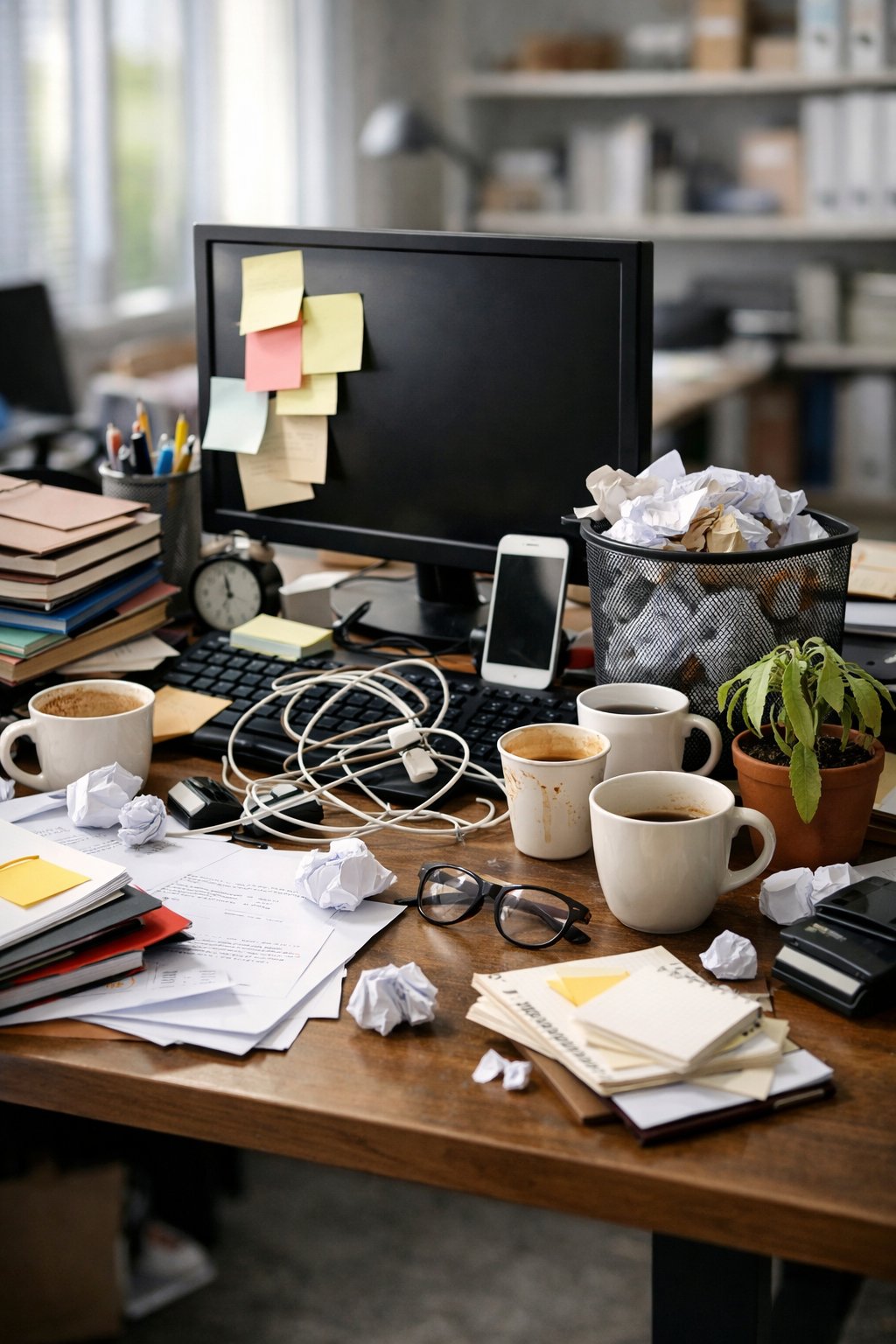
Messy paper stacks on your desk make it hard to find what you need. You waste time searching through piles instead of working on important tasks.
Papers spread across your workspace also create mental clutter. Your brain tries to process everything it sees, which drains your energy and focus.
When documents pile up, important deadlines can get buried and forgotten. You might miss bills, forms, or notes that need your attention.
Try sorting papers right away instead of letting them stack up. Use folders, trays, or filing systems to keep things organized. Even a simple inbox and outbox system helps.
If you don’t need a paper anymore, recycle it or scan it digitally. Less paper means less mess and more room to work.
Don’t miss: 15 Stylish Office Shelving Ideas for a More Organized Workspace
8. Neglecting to Personalize Your Workspace Thoughtfully
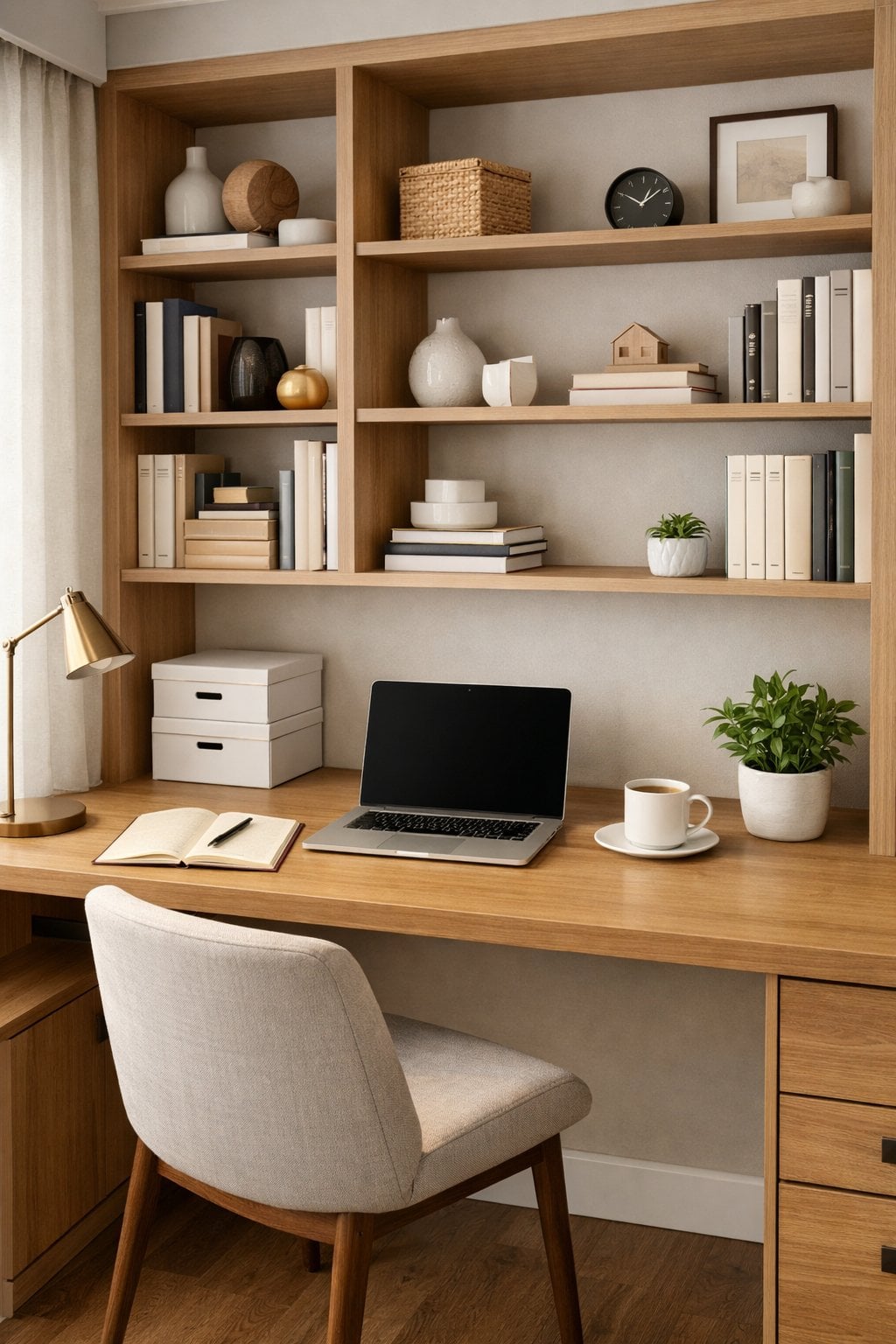
Your desk shouldn’t look like a generic showroom, but going overboard with personal items can hurt your focus. The key is finding the right balance.
A few meaningful items can boost your mood and motivation. Think of one family photo or a small plant that makes you happy. These touches remind you why you work hard.
Too many decorations become visual clutter. Your brain has to process everything it sees, which drains mental energy. This makes it harder to concentrate on actual work tasks.
Choose items that serve a purpose or bring genuine joy. Skip the random trinkets that just collect dust. A thoughtful approach to personalization keeps your space comfortable and productive.
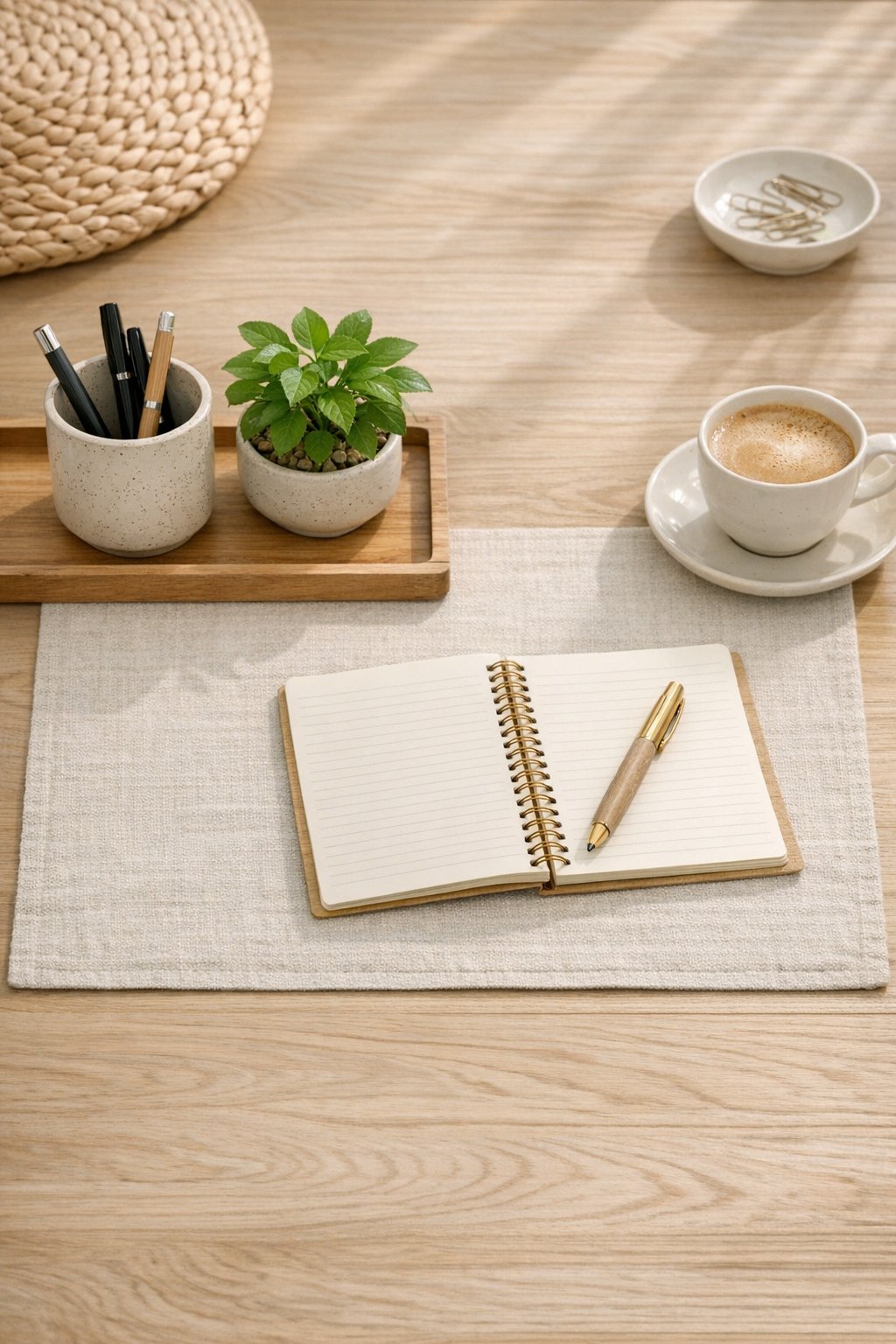
9. Using Too Many Sticky Notes & Creating Visual Chaos
Sticky notes seem like a quick fix for remembering tasks. But when you cover your desk and monitor with them, they create visual clutter that works against you.
Your brain has to process every bright colored square in your field of vision. This constant visual noise makes it harder to focus on the actual work in front of you.
When everything is marked as important with a sticky note, nothing feels important anymore. You’ll waste time scanning through dozens of notes to find what you need right now.
Try limiting yourself to just three sticky notes at a time. Move the rest to a single notebook or digital task list. Your desk will look cleaner, and your mind will feel clearer…

Thanks for reading,
Anli