A cluttered home office can make even simple tasks feel harder. But a few small changes might bring everything back into focus.
You don’t need a full makeover to feel more organized. Just a handful of smart, doable hacks can make your workspace feel lighter and calmer.
The ideas I’ve put together below are simple enough to try today. They’re also flexible, so you can fit them into any style or setup.
Pick one or two to start. You might be surprised by how quickly your space starts supporting your work instead of getting in the way.
Let’s begin right away!
Want to Save this Article?
You’ll also love: 10 Easy Desk Decluttering Ideas for a Calm and Productive Workspace
The 3 Hacks I’d Do Right Away
If you want quick wins, these simple changes make your workspace clearer in just a few minutes. They take almost no setup and give you an instant sense of order.
- Adopt a “One Tray” Paper Rule – Grab any tray or shallow box and make it the landing spot for all incoming papers. This stops piles from spreading and gives you one place to check when you need something.
- End Each Day With a 2-Minute Reset – Set a short timer and put everything back where it belongs. This tiny habit keeps clutter from building up and helps you start tomorrow with a clear mind.
- Keep a “Daily Essentials” Caddy – Gather your most-used items into one small container. It keeps your desk tidy and makes it easy to move your essentials if you change the place where you work.
1. Use Vertical Wall Space
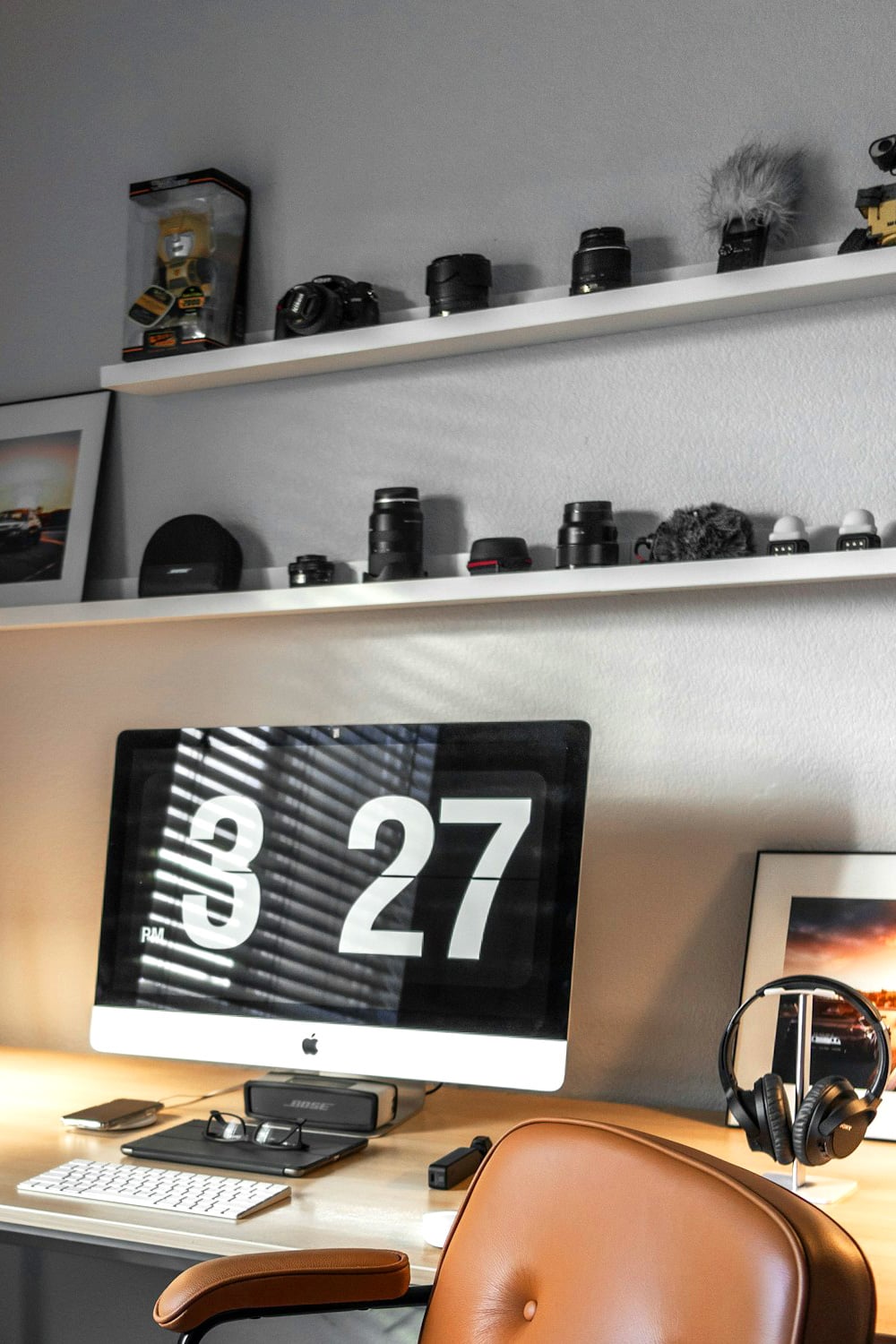
(Photo by Michael Soledad on Unsplash)
When your desk feels crowded, look up instead of out. Vertical wall space is often empty, but it can do a lot of work for you. You can hang floating shelves for books, boxes, or decor.
A pegboard or wall grid is great for holding scissors, headphones, notes, or small baskets. This keeps your most-used items close, but not all over your desk. It also makes cleaning easier, because there is less to move around.
Start with one wall area above or beside your desk and choose a simple system you like. The goal is to lift things off your work surface so you have more room to think, type, and create without feeling crowded by stuff.
Don’t miss: This Warm Scandinavian Small Home Office Gets Transformed in 10 Different Design Styles
2. Create a “Command Center” Drawer

(Photo by Cassa Vida on Unsplash)
A “command center” drawer is a single drawer that holds only your daily essentials. Think of it as the control hub of your home office. Inside, you keep things like pens, sticky notes, scissors, chargers, and maybe a small notepad.
The key is to keep this drawer focused and not let random items sneak in. You can use small trays or dividers so everything has a clear spot. When you sit down to work, you know exactly where your basics are.
When you finish for the day, they all go back into this drawer. This simple habit cuts down on searching, keeps your desktop clear, and makes your workspace feel calmer and ready for work.
Read also: 15 Feminine & Elegant Home Office Decor Ideas for Inspiration
3. Add a Rolling Cart for Overflow

(Image: Ikea NISSAFORS Rolling Cart – ikea.com)
If your desk is doing too many jobs, a rolling cart can pick up the extra work. Use it for things that you need often, but not every second, like your printer, notebooks, craft supplies, or extra paper.
Because it has wheels, you can pull it close when you are working on a project, then roll it away when you want a cleaner view. This is especially helpful in small spaces or shared rooms.
You can use bins or magazine holders on the cart to keep items grouped and easy to grab. Instead of piling everything on your desk, let the cart hold the overflow so your main workspace stays open and easier to use.
Read next: 12 Scandinavian Home Office Ideas & Inspiration to Create a Calm & Productive Workspace
4. Use Drawer Dividers for Micro-Organization
A drawer without dividers can turn into a junk zone very quickly. Drawer dividers break the space into smaller sections so every item has a home. You can use store-bought organizers or simple boxes you already have.
Give each section a job: one for pens, one for cables, one for sticky notes, one for small tools. This makes it easier to find what you need and harder for clutter to spread.
When you open the drawer, you see clear categories instead of a random mix. It also helps you notice when you have too many of one thing.
Micro-organization sounds fancy, but it just means giving your stuff clear spots so your brain does not have to work as hard to stay organized.
5. Hide Cables With a Cable Box
Cords and power strips can make even a tidy desk look messy. A cable box is a simple way to hide that visual clutter. You place the power strip inside the box and feed the cords through the openings.
The box sits on the floor or on a shelf, and suddenly the tangle is out of sight. You can also use small clips or cable ties to guide cords along the back of your desk or down a table leg. This keeps them from hanging everywhere or getting under your feet.
The goal is not to make cables disappear completely, but to give them a neat path and a contained home. Your workspace will feel calmer when you are not staring at a knot of wires all day.
6. Label Everything (Lightly)
Labels are like tiny signs that help your brain relax. When you put simple labels on bins, drawers, or shelves, you do not have to remember where everything goes. You can use a label maker, stickers, or even small tags tied with a string.
Keep the wording short and clear, like “Cables,” “Notebooks,” or “Mail.” You do not need to label every single thing, just the main storage spots you use often.
Light labeling is especially helpful if you share the space with someone else. It makes it easier for everyone to put things back in the right place. Over time, this keeps your system from falling apart and turning into random piles again.
7. Use a Desktop Riser
A desktop riser lifts your monitor to a more comfortable height and gives you bonus storage underneath. When your screen is higher, your neck and shoulders can feel better during long work sessions.
Under the riser, you can slide your keyboard, notebook, or a small tray for pens and sticky notes. This clears more space on your main desk surface without adding another piece of bulky furniture.
If you do not want to buy a riser, you can stack a few sturdy books as a temporary fix. The idea is to use the space above your desk more wisely. You get a better viewing angle and a small “garage” for items that usually float around your workspace.
8. Adopt a “One Tray” Paper Rule
Paper can spread fast if it does not have a clear landing spot. A “one tray” rule means all incoming paper goes into a single tray or inbox. Mail, notes, printouts, and forms all land there first, instead of in random piles.
Once a week, you go through the tray and decide what to file, recycle, shred, or act on. This keeps paper from taking over your desk and helps you stay on top of important items.
The tray does not have to be big or fancy. It just needs to be the one place where paper waits for your attention. With this simple rule, you still see what needs to be done, but you are not surrounded by scattered stacks.
9. Store Like With Like
Storing “like with like” makes your office easier to use. Instead of putting things wherever there is space, you group similar items together. All pens and markers go in one area, all cables in another, all notebooks in another.
You can use bins, drawers, or boxes for each category. This way, when you need something, you know exactly where to look. It also helps you notice when you have duplicates or items you no longer use.
Over time, this cuts down on clutter and saves you time. Your brain does not have to remember a complicated system. It just knows that similar things live together in clear, logical spots.
10. Use Clear Bins for Deep Shelves
Deep shelves can turn into dark caves where items disappear. Clear bins fix that problem by letting you see what is inside without pulling everything out. You can group items by type, like office supplies, tech gear, or extra paper, and give each bin a simple label.
Slide the bins onto the shelf so the open side or label faces you. When you need something, you pull out the bin, not a messy stack. This keeps the back of the shelf useful instead of wasted space.
Clear bins also make it easier to put things away in the right place, because you can see where they belong at a glance. It’s a small change that makes deep storage feel more open and manageable.
11. Add a Slim File Box for Active Projects
A slim file box is a smart way to keep current projects close without covering your desk in paper. You can use hanging folders or simple file folders, one for each project or category.
Label them with short names like “Invoices,” “Client A,” or “School Forms.” Keep the file box on your desk, beside it, or on a nearby shelf. The idea is that only active or short-term items live here.
When a project is done, you move it to long-term storage or recycle what you no longer need. This keeps your main workspace clear while still giving you quick access to the things you are working on right now.
12. Use a Wall-Mounted Calendar or Whiteboard
A wall-mounted calendar or whiteboard gives you a clear view of your time and tasks without taking up desk space. You can use it to track deadlines, meetings, and weekly to-dos. Because it is large and visible, it is harder to ignore than a small planner that might get buried.
Hang it near your desk so you can see it while you work. You might use different colors for work, home, or personal tasks if that feels helpful. At the start or end of each week, update it with what is coming up.
This clever habit keeps your schedule out in the open and reduces the mental load of trying to remember everything.
13. Create a Charging Station
A charging station keeps all your devices and cords in one tidy spot instead of scattered around the room. Choose a small tray, box, or shelf near an outlet. Add a multi-port charger or power strip, and thread the cables through so they stay put.
You can use small clips or ties to keep cords from slipping away. This is where your phone, tablet, headphones, or other devices go when they need power.
By giving charging a dedicated place, you avoid looking for chargers and dealing with cords all over your desk. It also makes it easier to unplug at the end of the day, because your devices have a clear place to rest.
14. Keep a “Daily Essentials” Caddy
A “daily essentials” caddy is a small container that holds the items you reach for every single day. This might include pens, highlighters, your planner, reading glasses, lip balm, or a small notepad.
The caddy can sit on your desk while you work and move with you if you like to change spots, such as from your desk to the sofa or dining table. At the end of the day, you can tuck it on a shelf or in a cabinet to clear visual clutter.
The goal is to keep your most-used items together and easy to grab, instead of spread across your workspace.
15. End Each Day With a 2-Minute Reset
A 2-minute reset at the end of your workday can keep your office steady and under control. Set a short timer and use that time to put things back where they belong.
Close your laptop, return pens to their holder, clear cups or dishes, and stack your notebook or planner neatly. You don’t need to deep clean. You’re just resetting the space to “ready” for tomorrow.
This helps you mentally clock out and makes it easier to start fresh the next day. Over time, it also stops clutter from building up, because you are dealing with it a little bit every day instead of waiting until it feels overwhelming.